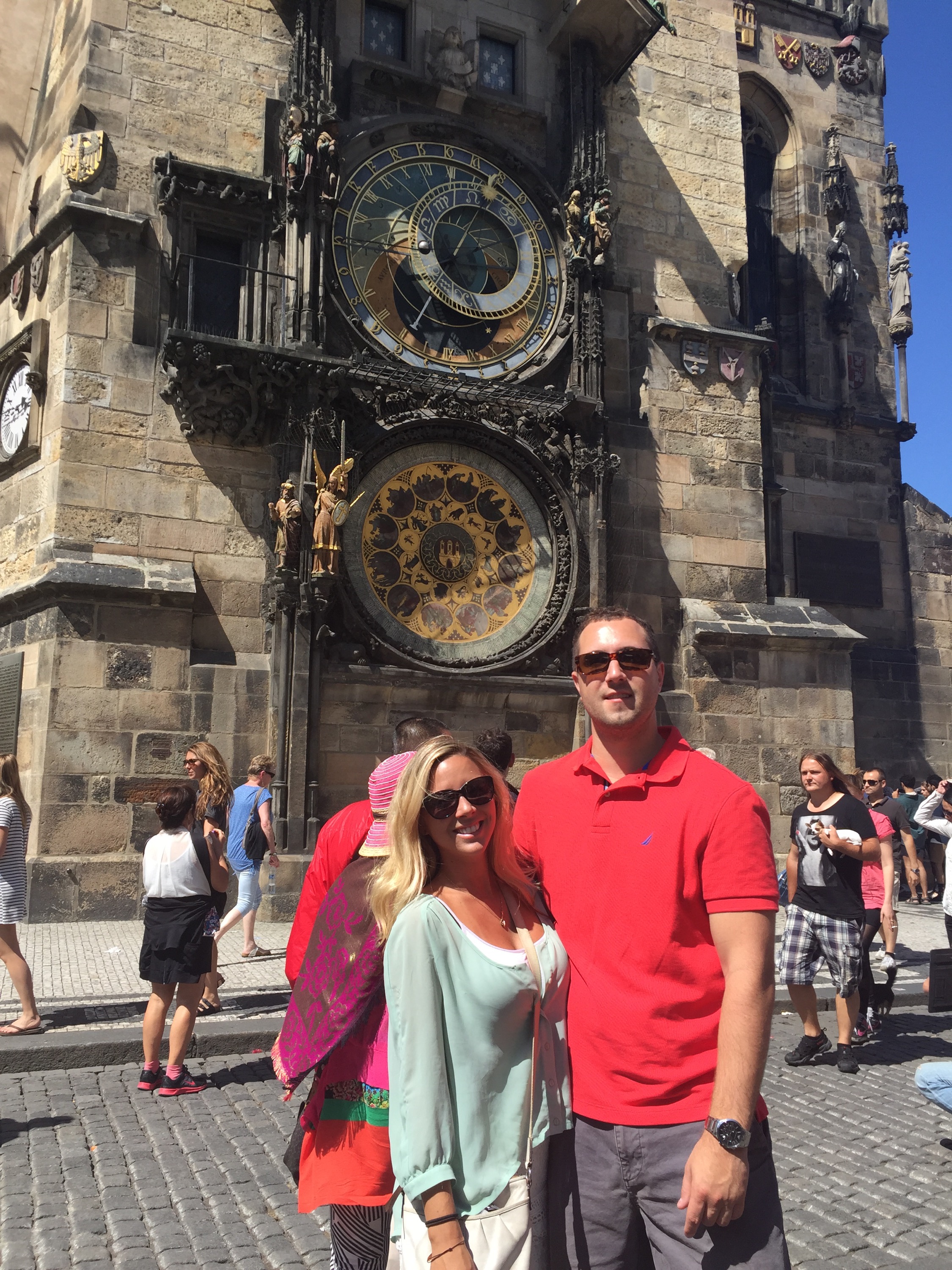
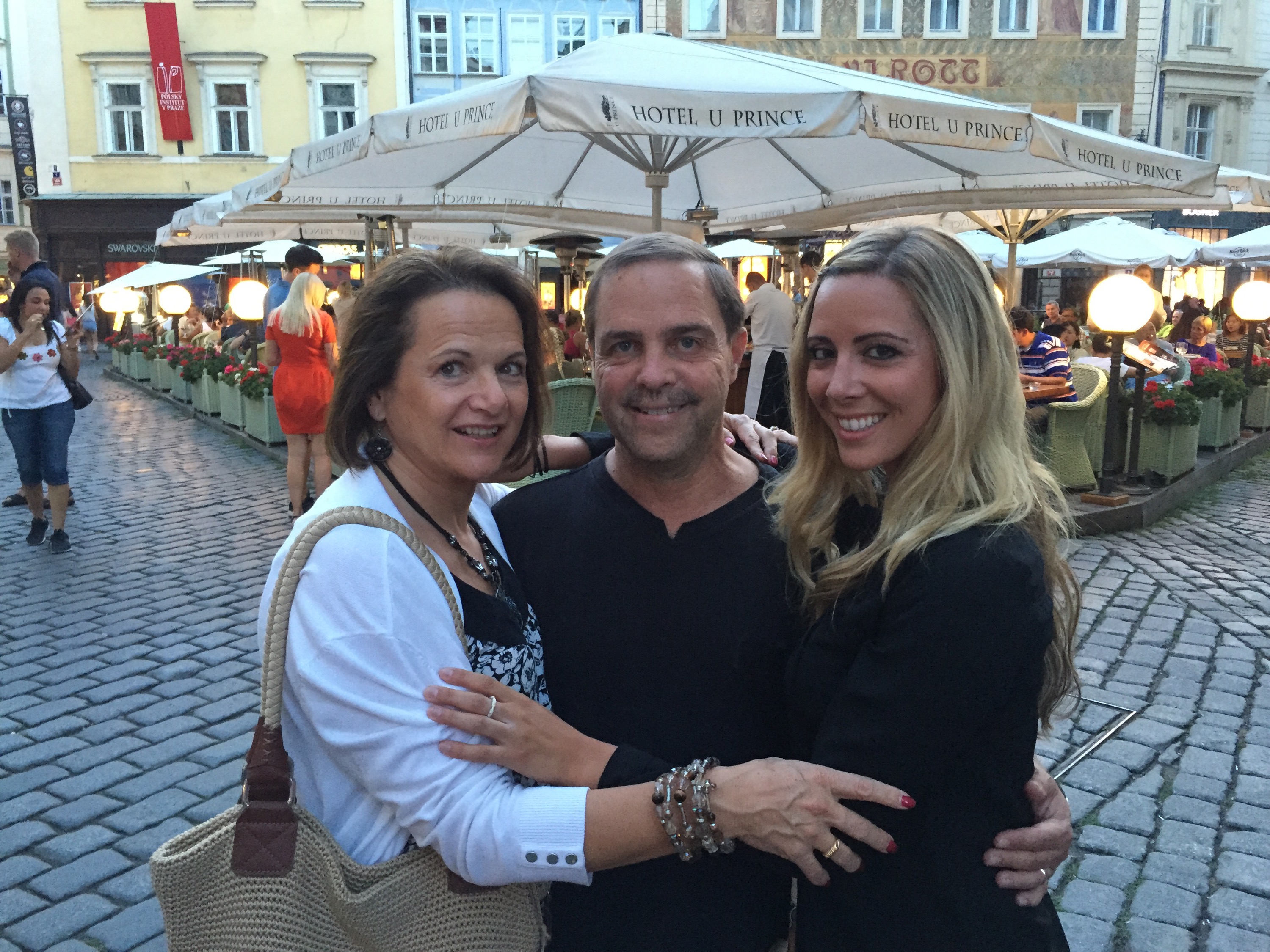
I had attached high expectations to Prague based off of the opinions of friends and family. We have ancestral roots in Prague and throughout the Czech Republic, so in addition to “czechin” out the unique historical landmarks and indulging in the cuisine, I was looking forward to connecting with the culture and stomping grounds of our ancestors. Prague was also a momentous destination because I was finally reuniting with Alex, who I hadn’t seen in a month. Prague certainly is an attractive city, with its cobble stoned squares of old and new, its crowning hilltop complex of castle and historical buildings, and its stately Charles Bridge stretching across the Vltava River. I have to say, though, I think the best part of our Prague experience was the seamless service we received at our unforgettable hotel, The Residence Agnes. I’ve never received such personalized, attentive care from a hotel staff as we experienced at The Residence Agnes. Beautiful Mikaela greeted us with a sunny smile and sat us down in the inviting atrium-like lobby when we arrived and provided us with maps, brochures, beverages, and recommendations. The entire staff worked round the clock to ensure we were happy, informed, and equipped with reservations and ideas for activities everyday. They even surprised me with a homemade gourmet birthday cake on my birthday and none of us even said it was my birthday, they took note of it from looking at my passport. One of the best parts about Agnes was also the unlimited complimentary wine they offered any hour of the day in the lobby. We took full advantage of this perk and, though the other guests probably didn’t appreciate our endless giggle fests, we shared many a laugh and story while saving a great deal of money. Prague is a wonderful city worth visiting, especially if castles, astrological clocks, and clubbing are all in your wheelhouse. I cannot say it was my favorite destination, most likely because I overhyped it based off of the opinions of friends and family, but I think also because it is very much a city and I think at this point I was ready for some trees and open space. But it was certainly worth, sorry last time I promise, “czeching” out ;).
Highlights and moments:
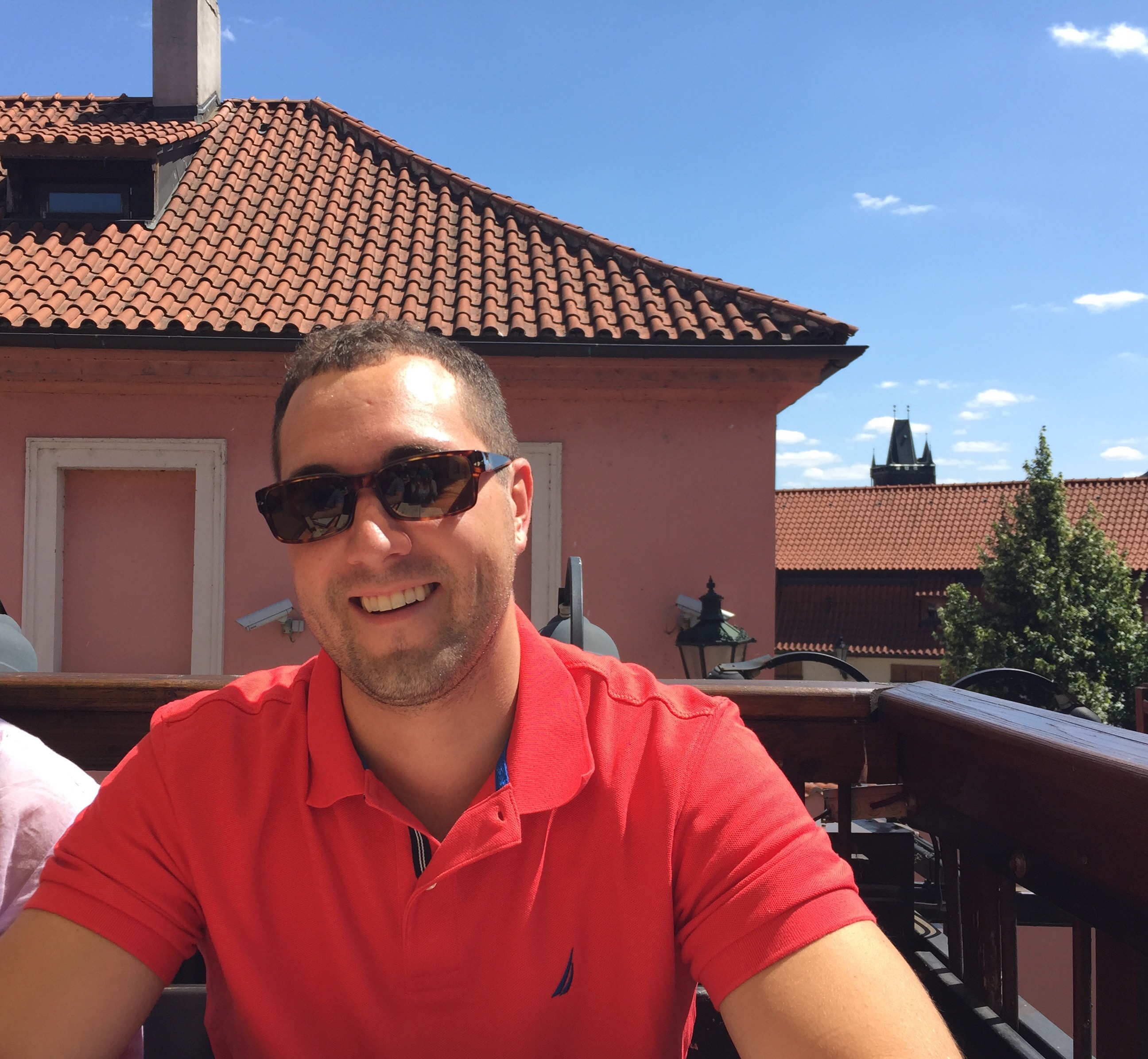
-Reuniting with my dearest Al pal. Alex flew in on the 26th and it was a joyous reunion! I missed that handsome goofball. 
-Daily runs along the Vltava River. I enjoyed running on the pedestrian-friendly path that ran parallel to the expansive River. These runs were necessary after all the free wine imbibing we did at Agnes. 
 -A stellar 4 course meal at Mlynec Restaurant. This was a Residence Agnes recommendation and it surely didn’t disappoint. With stunning views of the Charles Bridge at sunset and a unique and avant gard menu, this restaurant proved to be a culinary experience for all five senses.
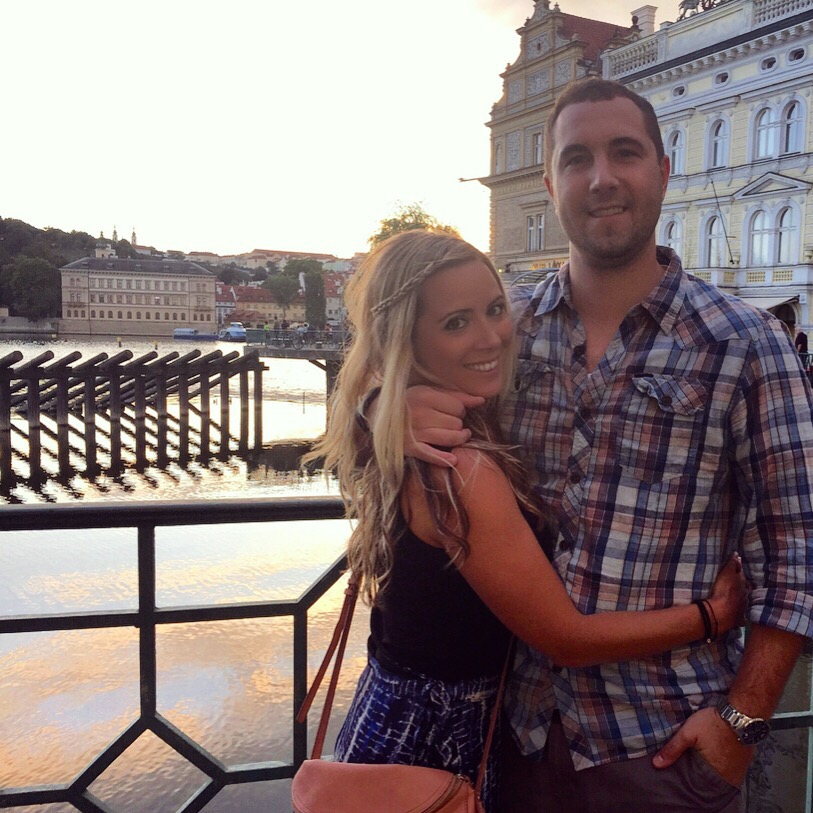
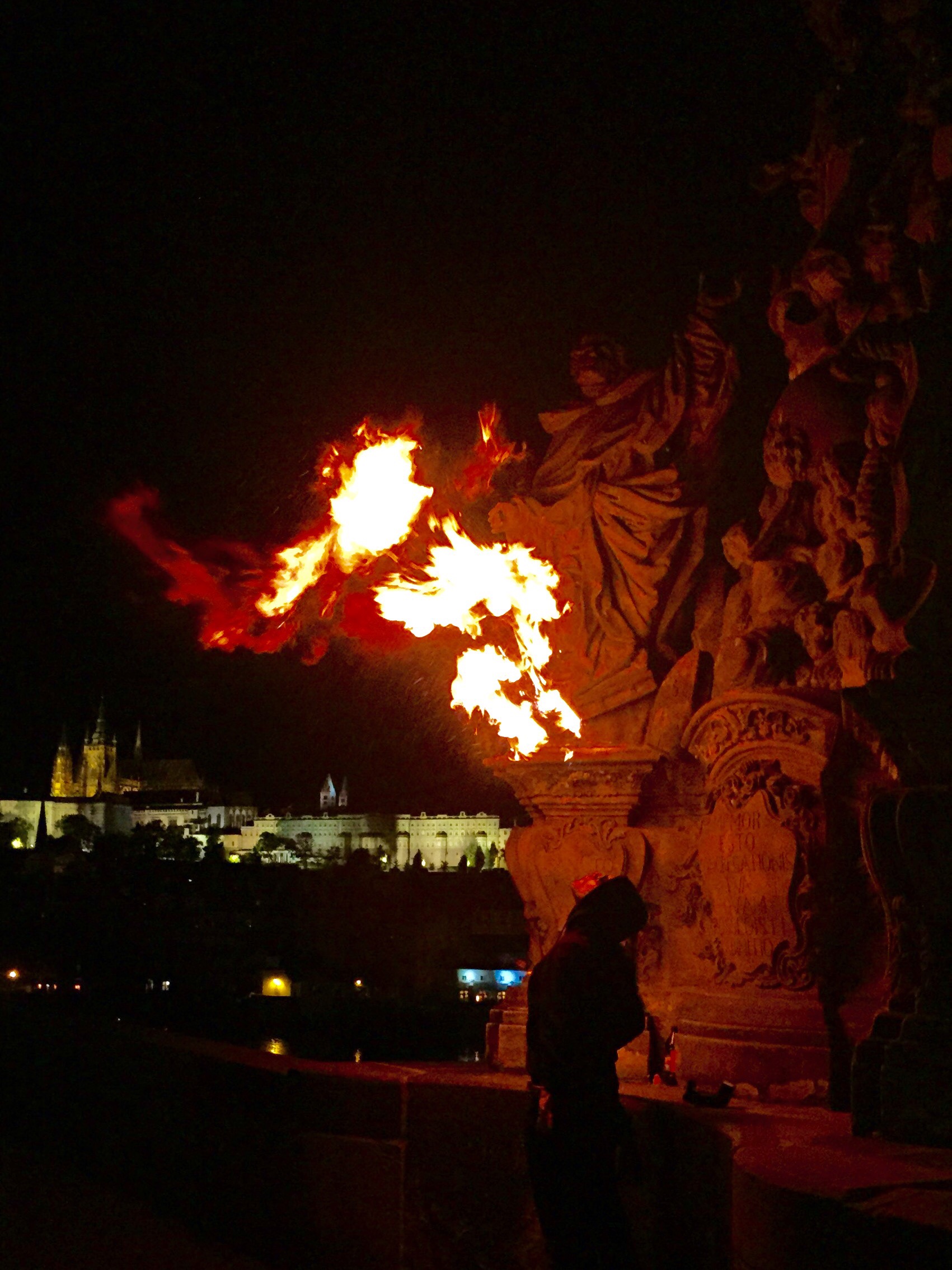
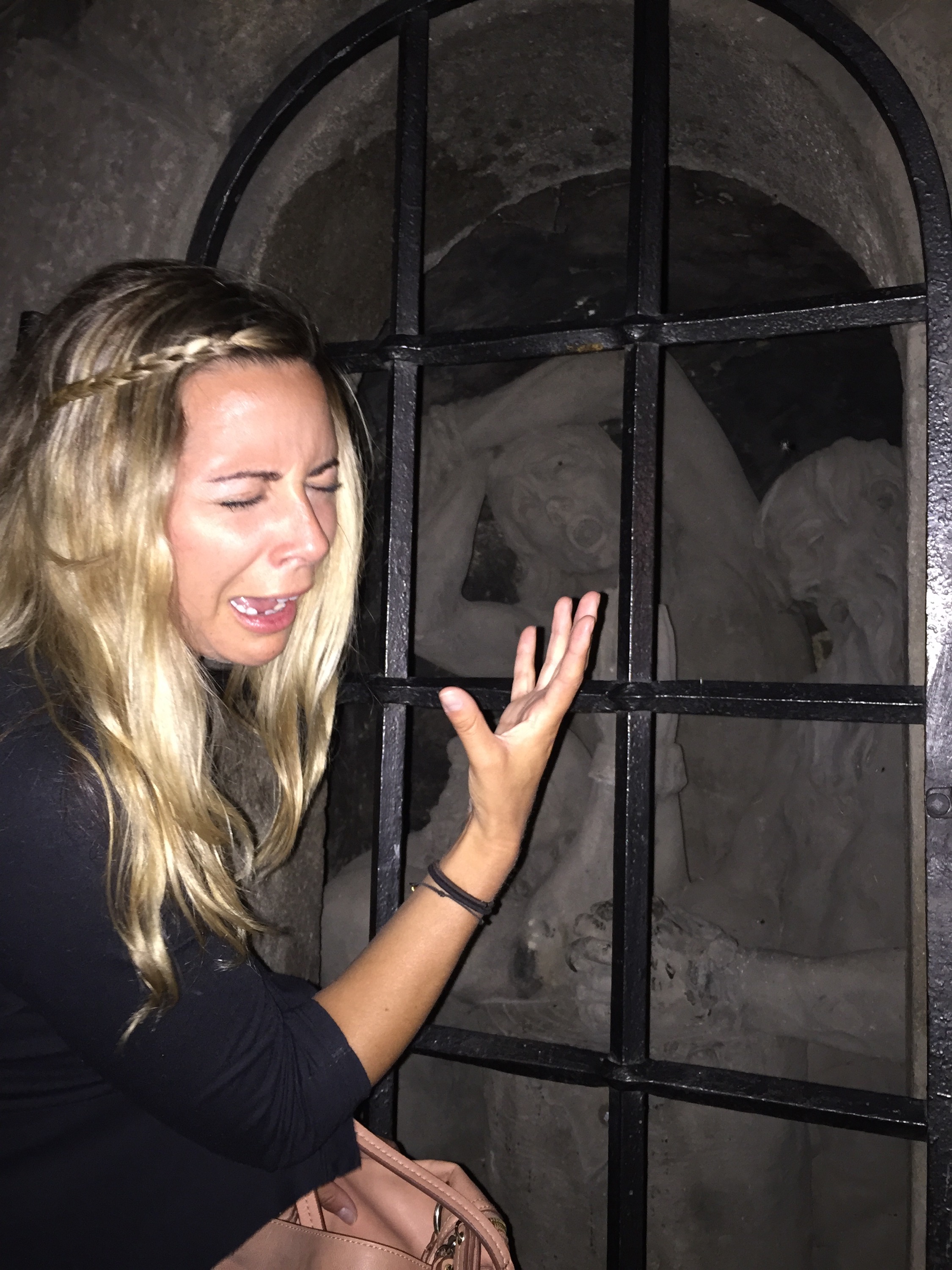
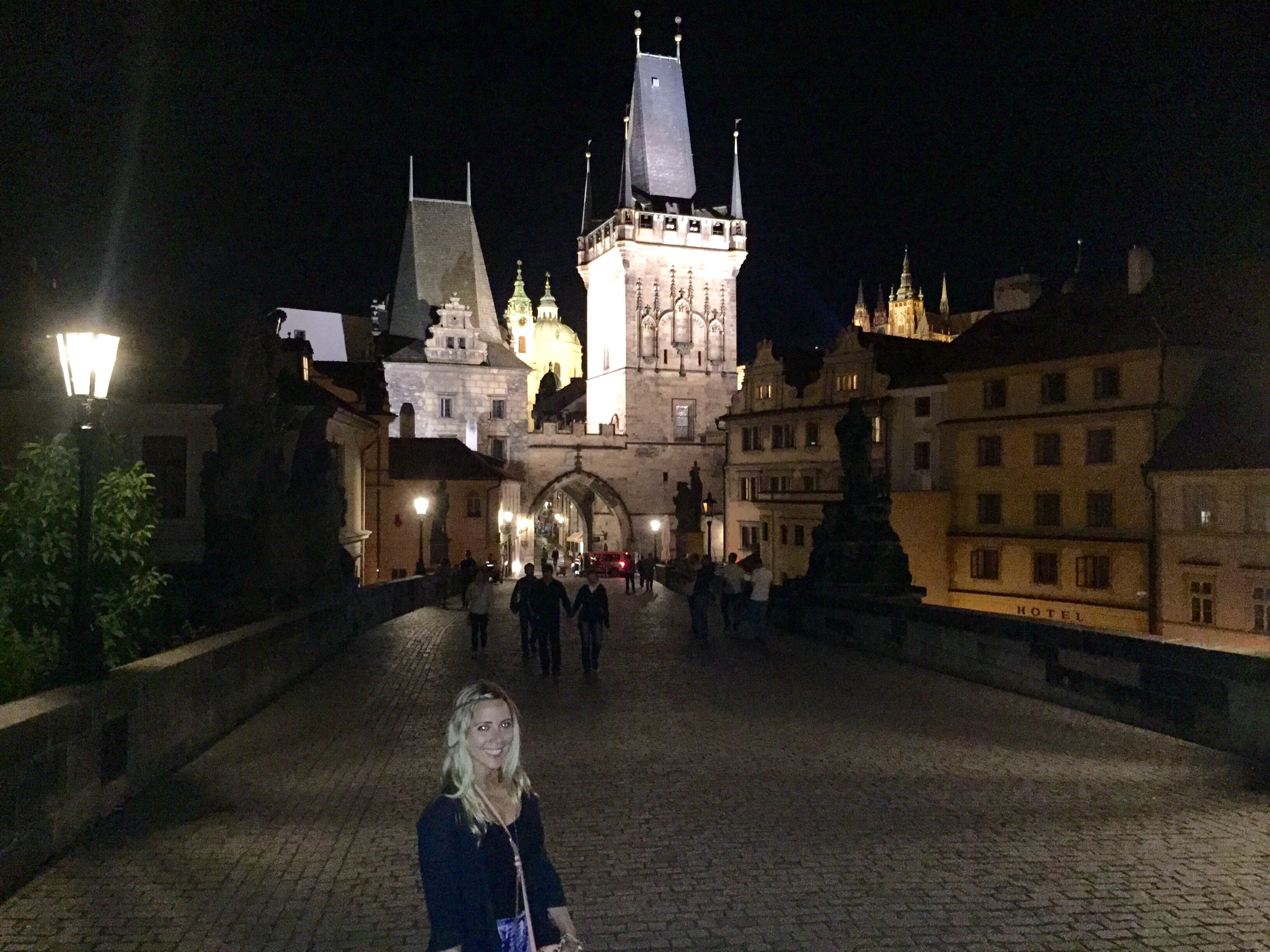
-Wine-ing and walking along the Charles Bridge at night. Alex and I savored a romantic night cap at a little table that was perched atop a lookout over the river. We then took a stroll across the bridge itself which was enchanting and slightly spooky. The bridge is lined with incredible sculptures, and while some were monuments to saints or Angels, others depicted more visceral aspects of the human experience such as anguished prisoners. There was a guy performing fire breathing which added to the whimsy of the walk along this historic bridge where kings used to parade across on coronation day. 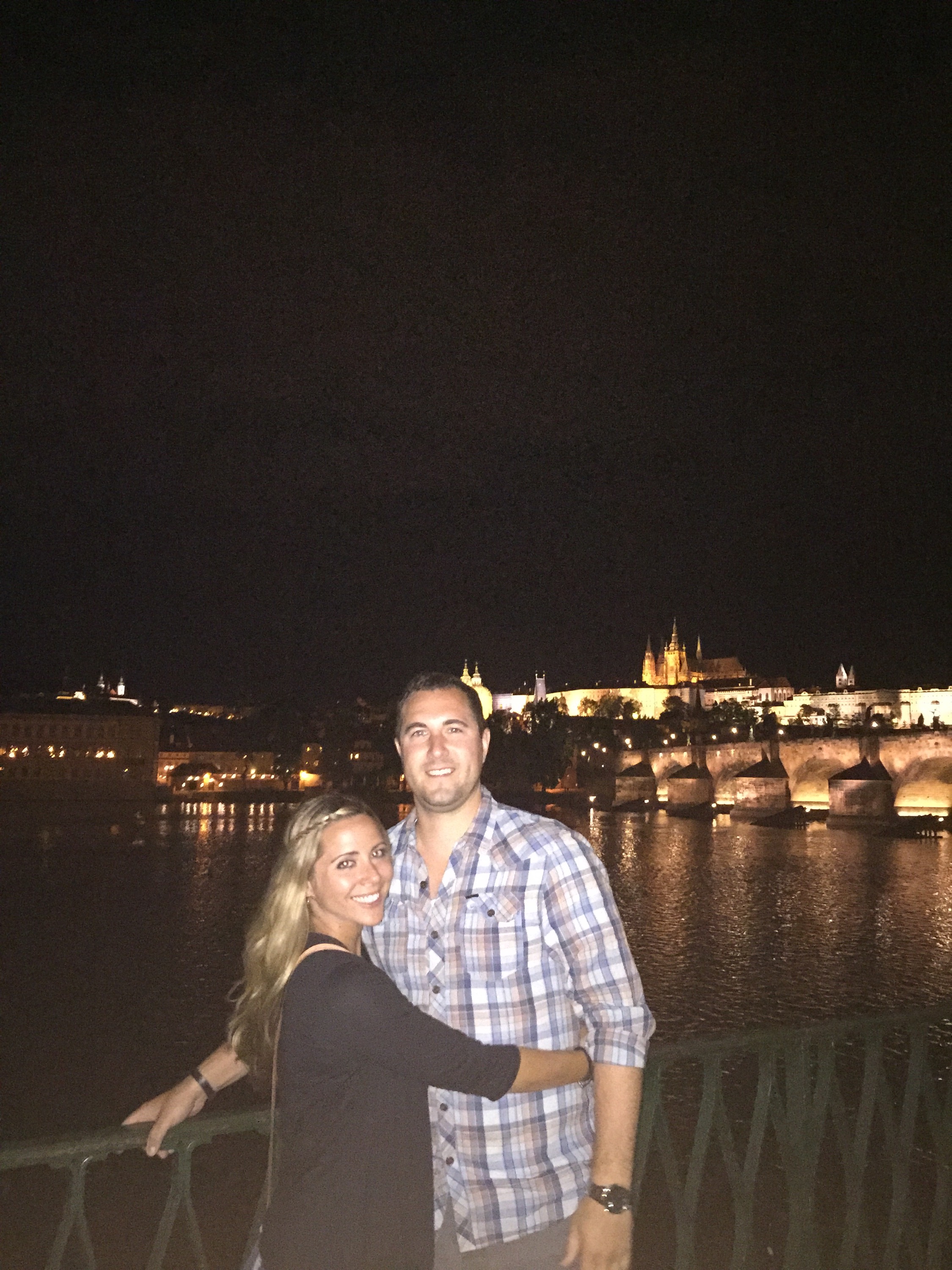

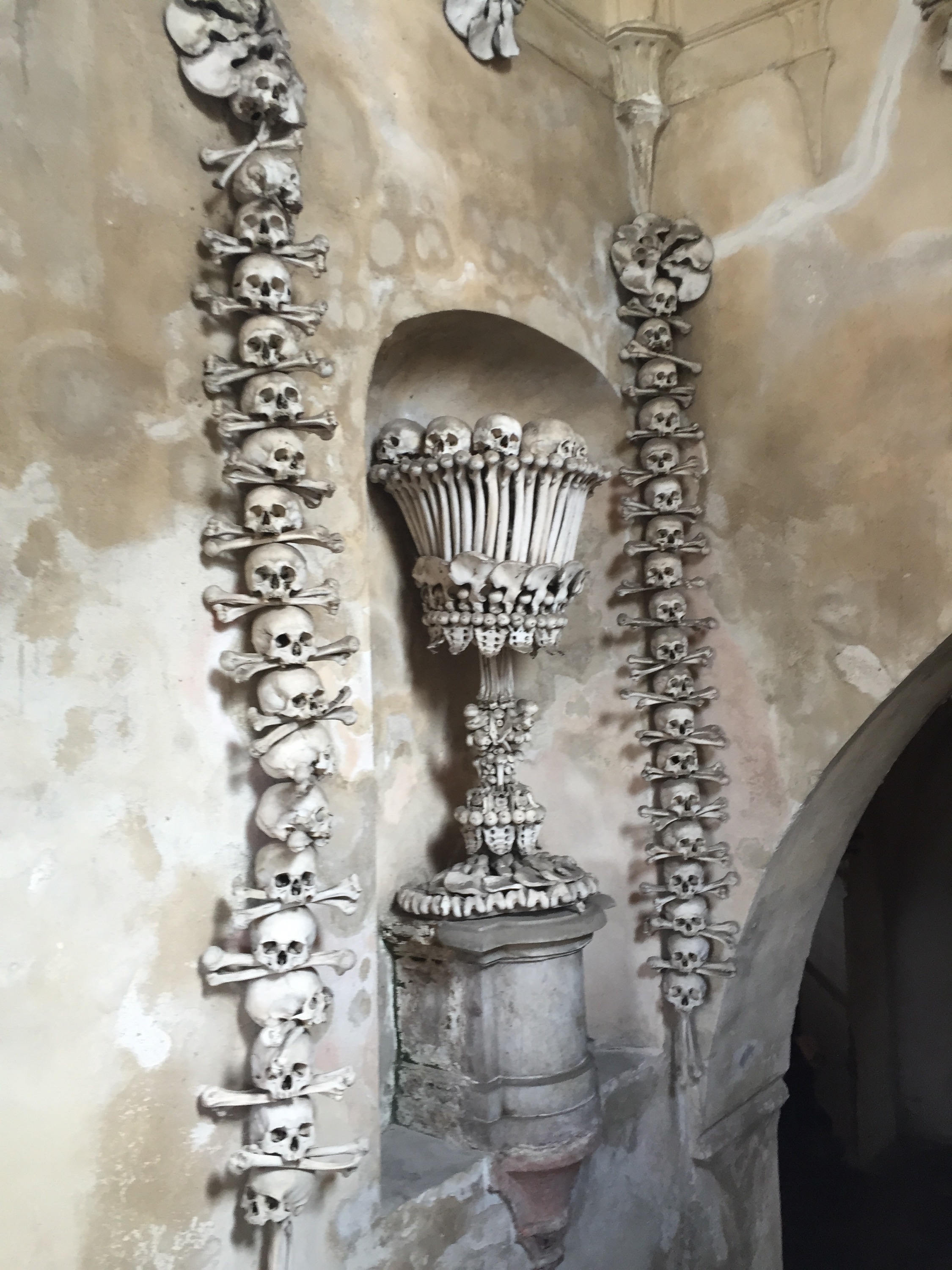
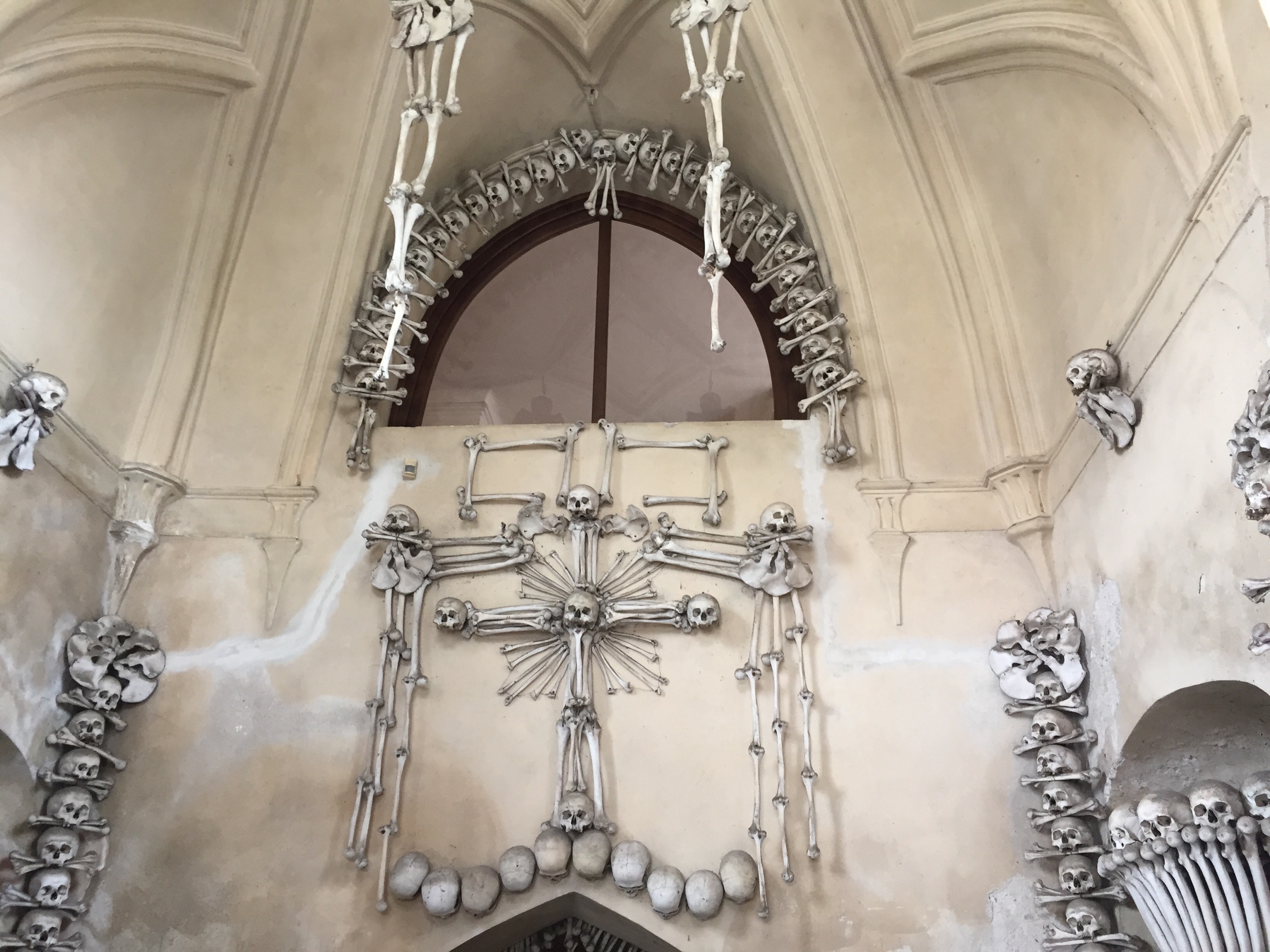
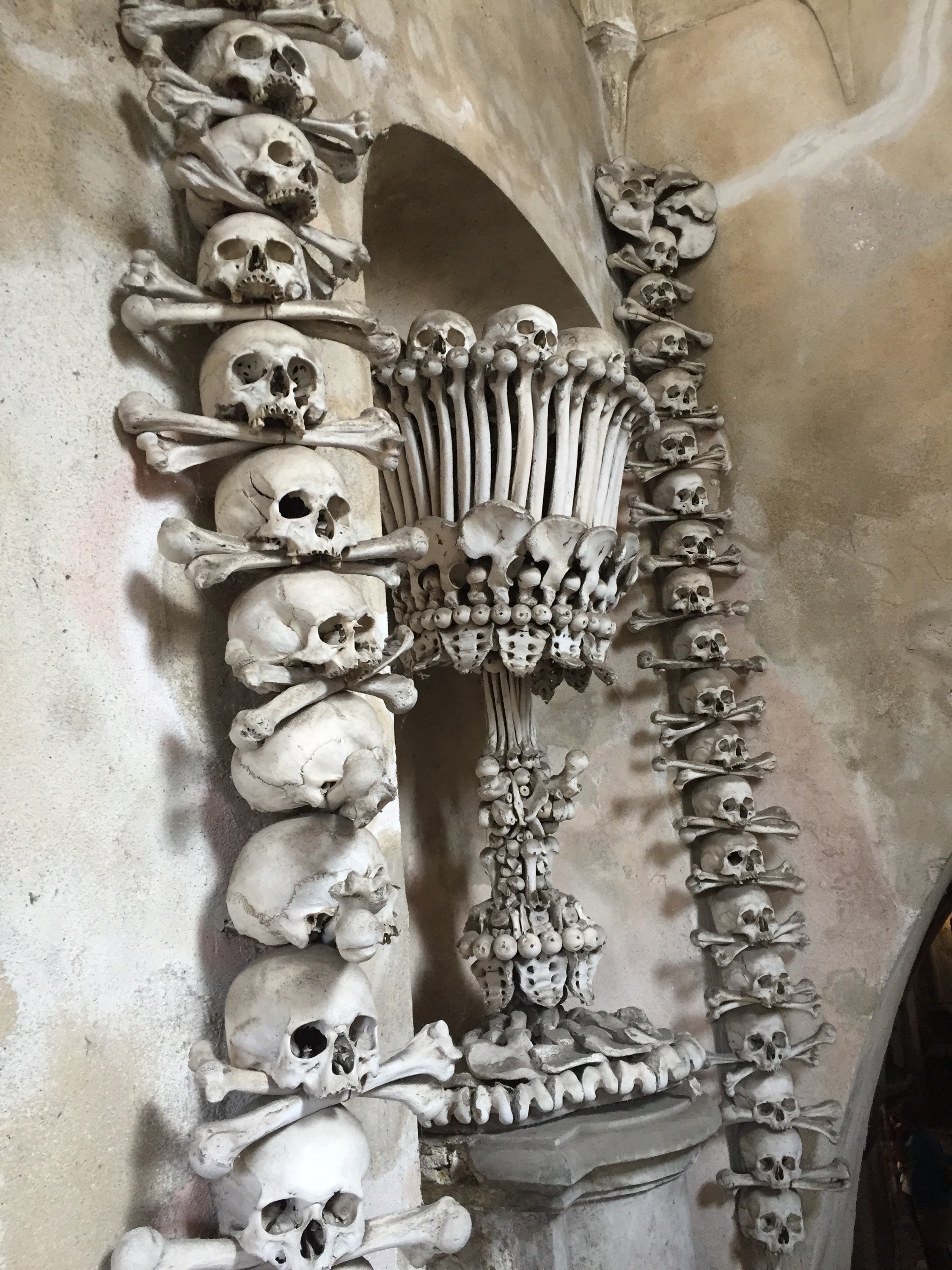
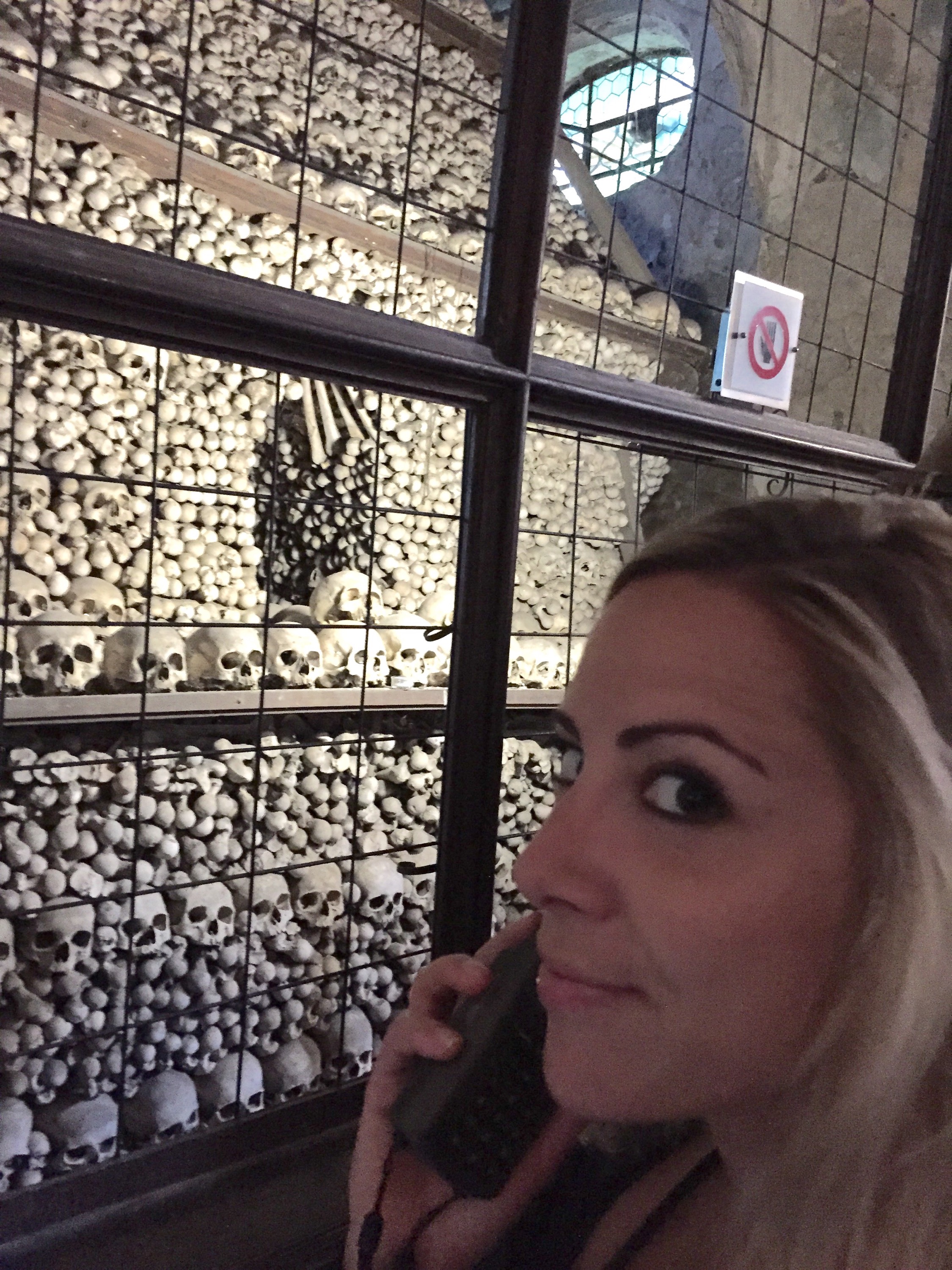
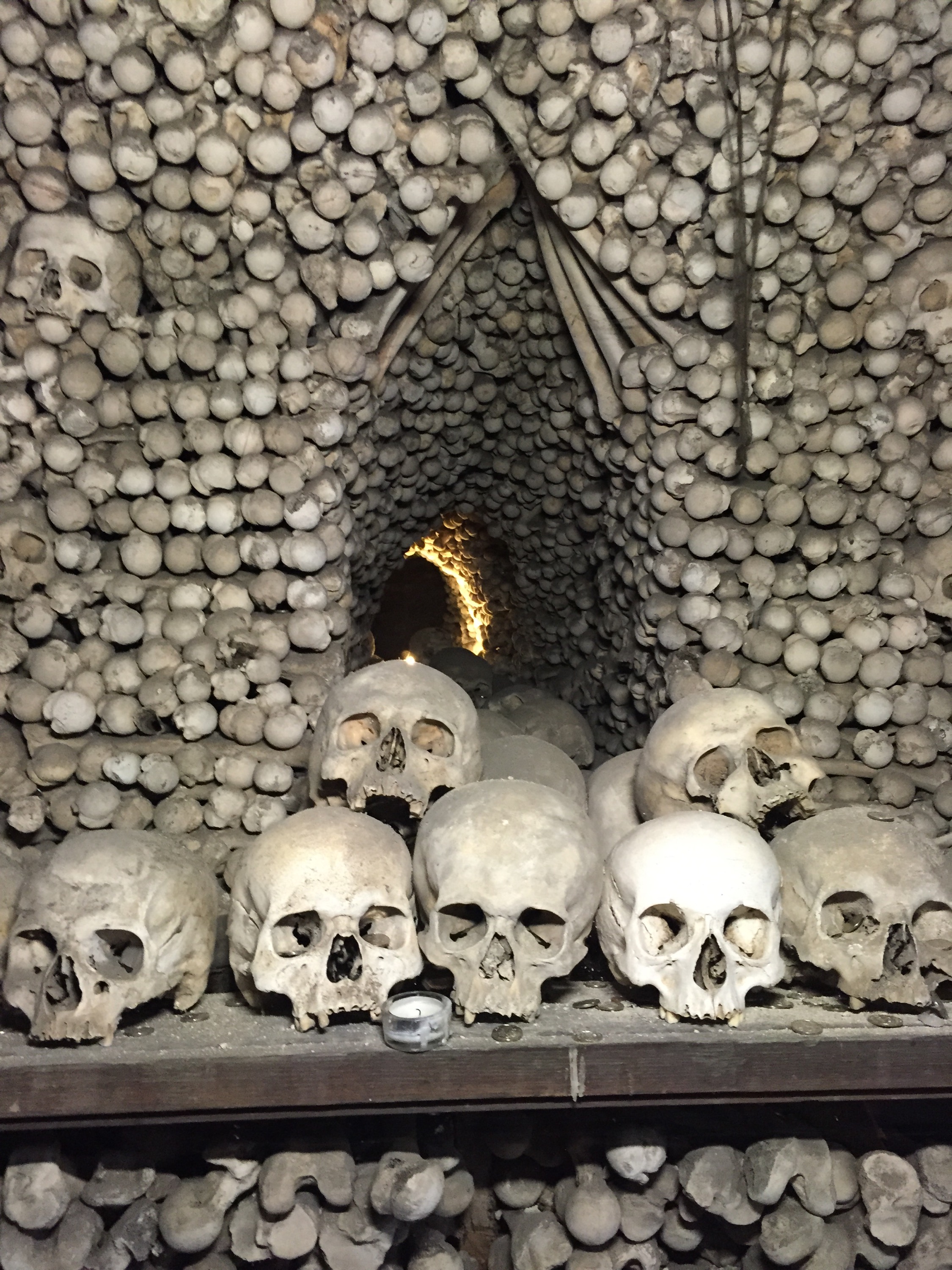
 -Exploring the famous bone church in Kutna Hora. Yes, you read that correctly, bone church… human bone church. Though there isn’t much to this tiny town about an hour outside of Prague, if you’re into Halloween thrills like I am, the bone church, properly known as The Sedlec Ossuary, is worth a visit. With an unassuming facade, the church shocks and for some appalls, as the church’s interior is adorned in 40,000 human bones. Most of the skeletons were victims of The Black Plague. Originally buried in the All Saints Church Cemetery, all of the skeletons were exhumed at the end of the 15th century and stored in the Ossuary, an underground portion of the church, when the church closed. In the 18th century, under Schwarzenberg direction, the bones housed in the Ossuary became the sinister interior design that it continues to showcase today, and that attracts tourists from all over the globe. The focal point of the small church would be the chandelier in the center, constructed by at least one of every single bone in the human body.




 Madness & Magic